



Dry January: A Sober Look at How Alcohol Effects Vision and Eye Health
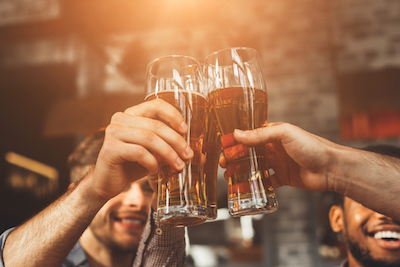
It’s estimated that as many as one quarter of adults in America partake in the Dry January Challenge, and it’s very likely none of them are doing it to protect their eye health. Even less likely are people abstaining from imbibing for the month of January to honor the Sober January tradition started in Finland in 1942 devised to bolster the war against the Soviet Union!
Simply put, as New Year’s resolutions go, committing to one month alcohol-free as a reset to the new year and a recommitment to health is not a bad way to go. With the possibility of 65-million people taking the plunge with you and supporting your efforts, there’s also a pretty good chance of success, and it’s cheaper than a gym membership.
No matter how you did in your own challenge this year, January is regularly a time to take a sober look at your life and what changes you look forward to in the coming year. Alcohol’s effects on the major organs of the body are all well known, so there are plenty of good reasons to curb your enthusiasm, but its effects on vision and eye health are often overlooked, and considering how serious they can be, they definitely shouldn’t be.
Alcohol Effects on Vision Short-Term
Depending on your physiology, one or two drinks of an evening might have very little noticeable effect beyond a comfortable warming or a morning headache. More than a couple of drinks, however, can cause short-term impairment of peripheral vision, blurred vision, slow pupil reaction, double vision, dilation constriction, dry eye and eyelid twitching, known as myokymia.
Each of these conditions on their own can be uncomfortable if not debilitating, but they can also be exceedingly dangerous especially when driving. Casual or occasional drinkers making safe, responsible choices not to drive will generally recover from these effects by the following day. Moderate or heavy drinkers, anyone consuming 2-4 drinks per day, will start to see cumulative effects on their general physical health including vision and eye health.
Long-Term Effects on Vision and Eye Health
Alcohol can cause localized and systemic effects, both impacting vision and eye health. Your eyes and vision are controlled by various muscles in the same way the rest of your body is articulated by muscles. Alcohol is famous for its immediate effects on muscle reaction and strength, and this is true for the eye muscles as well.
Prolonged alcohol consumption causes a progressive weakening of the eye muscles, making those short-term effects of drinking like blurring and double vision possibly permanent.
Systemically, excessive alcohol consumption can lead to deficiencies in essential nutrients and vitamins including B12, folic acid, and thiamine. These deficiencies have been known to cause toxic optic neuropathy, or damage to the optic nerve fibers, resulting in chronic permanent vision loss.
Preliminary studies also suggest a possible link between heavy drinking and an increase in the risk of developing cataracts, age-related macular degeneration, glaucoma, and diabetic retinopathy.
It is also well understood that alcohol effects the heart, and these effects can be diagnosed by your eye doctor by its effects on your eyes.
Moderation for Eye Health All Year Long
Dry January may be behind us, but there’s no reason not to make a resolution to care for your eyes all year long. Even a slight moderation in alcohol consumption can have considerable effect on eye health.
Make your New Year’s resolution 20/20 and ask for a seltzer with lemon next time!
Cheers! from Optical Expressions


Contact Info
Hours of Operation
- Monday 8:00am - 6:00pm
- Tuesday 8:00am - 6:00pm
- Wednesday 8:00am - 6:00pm
- Thursday 8:00am - 6:00pm
- Friday 8:00am - 6:00pm
- Saturday Closed
- Sunday Closed
© 2026 Optical Expressions. All rights Reserved. Accessibility Statement - Privacy Policy - Sitemap
Powered by:

